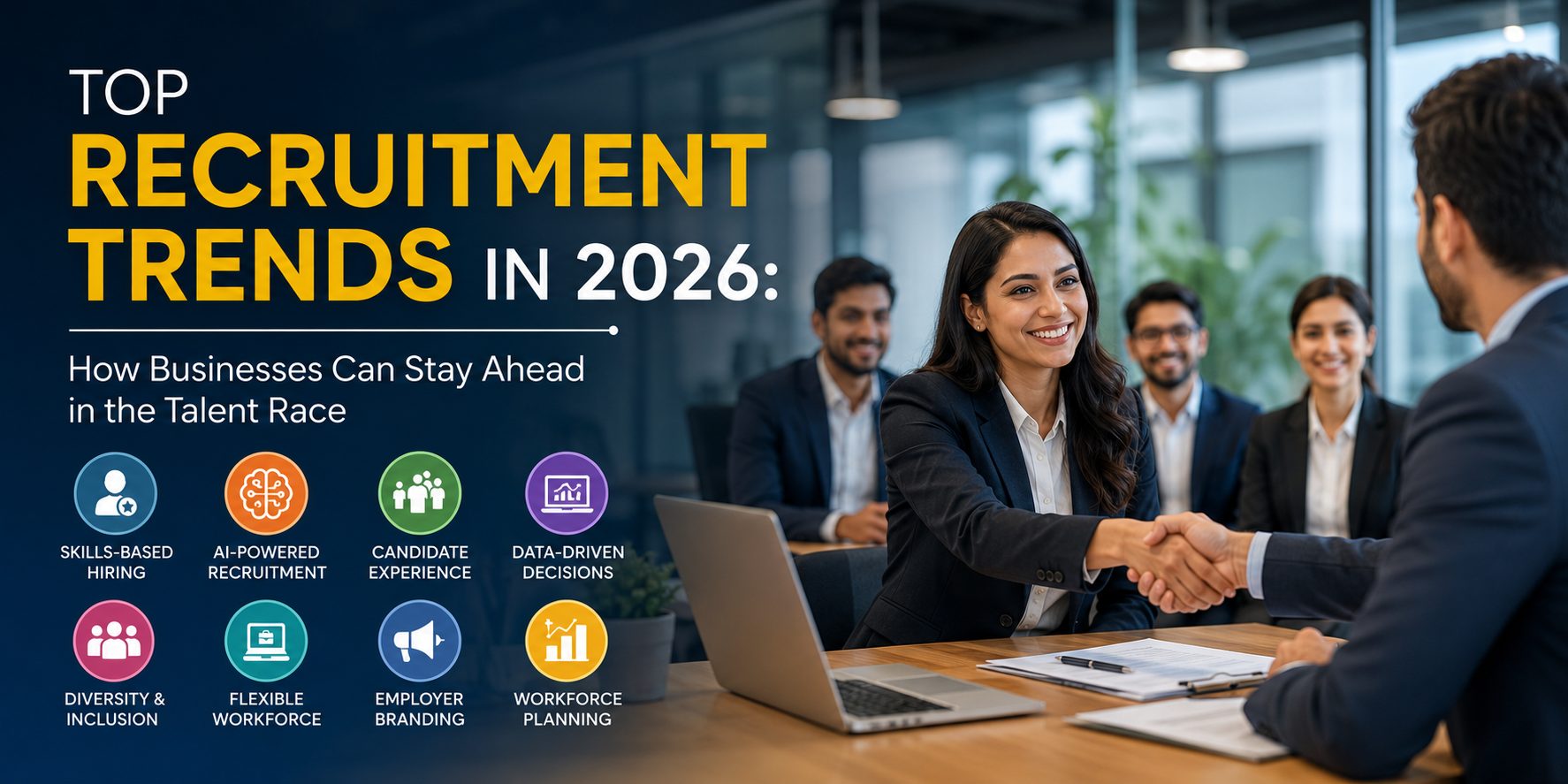
The recruitment landscape is evolving faster than ever. As businesses adapt to technological advancements, changing workforce expectations, and increasing competition for skilled talent, hiring strategies must also transform. In 2026, organizations are no longer focused solely on filling vacancies—they are building agile, future-ready workforces capable of driving long-term growth.
For employers, understanding the latest recruitment trends is essential to attracting, hiring, and retaining top talent. Whether you’re a startup, a growing enterprise, or an established organization, staying ahead of these trends can provide a significant competitive advantage.
1. Skills-Based Hiring Takes Center Stage
One of the biggest recruitment trends in 2026 is the shift from degree-based hiring to skills-based hiring. Employers are increasingly prioritizing practical abilities, certifications, and real-world experience over traditional educational qualifications.
This approach broadens the talent pool and helps organizations identify candidates who can deliver results from day one. Companies are using skill assessments, practical tests, and portfolio reviews to evaluate applicants more effectively.
Why it matters:
- Expands access to qualified talent.
- Reduces hiring bias.
- Improves job performance and productivity.
- Helps fill specialized roles faster.
Businesses that focus on skills rather than credentials are finding it easier to meet workforce demands in a rapidly changing market.
2. AI-Powered Recruitment Becomes Mainstream
Artificial Intelligence (AI) is no longer a futuristic concept in recruitment—it has become a standard tool. In 2026, recruiters are leveraging AI to automate repetitive tasks such as resume screening, candidate matching, interview scheduling, and communication.
AI helps recruiters identify suitable candidates faster while reducing manual workload. This allows HR teams to spend more time building relationships with candidates and making strategic hiring decisions.
Common AI applications:
- Resume parsing and screening.
- Candidate ranking.
- Automated interview scheduling.
- Recruitment chatbots.
- Predictive hiring analytics.
While AI improves efficiency, successful organizations continue to combine technology with human judgment to ensure fair and effective hiring.
3. Candidate Experience Is a Top Priority
Today’s job seekers have more options than ever before. As a result, candidate experience has become a key differentiator for employers.
A lengthy application process, poor communication, or delayed feedback can cause talented candidates to accept opportunities elsewhere. Organizations are investing in smoother, more transparent recruitment journeys to enhance their employer brand.
Elements of a strong candidate experience:
- Simplified application processes.
- Clear job descriptions.
- Timely communication.
- Transparent hiring timelines.
- Constructive interview feedback.
Companies that prioritize candidate experience not only attract better talent but also strengthen their reputation in the market.
4. Flexible Workforce Models Continue to Grow
The demand for workforce flexibility remains strong in 2026. Businesses are increasingly using contract staffing, temporary workers, project-based professionals, and outsourced teams to meet changing operational needs.
Flexible staffing allows organizations to scale their workforce quickly without committing to long-term hiring costs.
Benefits of flexible staffing:
- Faster workforce expansion.
- Reduced recruitment costs.
- Access to specialized talent.
- Better workforce agility.
- Improved response to seasonal demand.
Industries such as manufacturing, logistics, retail, healthcare, and hospitality are particularly benefiting from flexible workforce solutions.
5. Employer Branding Becomes a Recruitment Necessity
Candidates today research potential employers before applying. They review company websites, social media profiles, employee testimonials, and online reviews to understand workplace culture.
As a result, employer branding has become an essential recruitment strategy.
Organizations that actively showcase their culture, employee success stories, training opportunities, and workplace values are attracting more qualified applicants.
Effective employer branding strategies:
- Sharing employee success stories.
- Posting workplace culture content.
- Highlighting career growth opportunities.
- Showcasing diversity and inclusion initiatives.
- Maintaining an active social media presence.
A strong employer brand helps businesses stand out in a competitive talent market.
6. Data-Driven Recruitment Gains Momentum
Recruitment decisions are becoming increasingly data-driven. HR teams are using analytics to improve hiring outcomes, reduce costs, and optimize recruitment processes.
Modern recruitment platforms provide valuable insights into candidate behavior, sourcing effectiveness, and hiring performance.
Key recruitment metrics:
- Time-to-hire.
- Cost-per-hire.
- Quality of hire.
- Candidate conversion rates.
- Employee retention rates.
By leveraging data, organizations can identify bottlenecks, improve efficiency, and make smarter hiring decisions.
7. Employee Retention Influences Recruitment Strategy
Recruitment and retention are becoming closely connected. Employers recognize that attracting talent is only half the challenge—retaining employees is equally important.
Companies are investing in employee development, workplace culture, and career progression programs to improve retention rates.
Popular retention initiatives:
- Learning and development programs.
- Mentorship opportunities.
- Employee wellness initiatives.
- Flexible work arrangements.
- Recognition and reward systems.
Organizations with strong retention strategies often enjoy lower hiring costs and higher employee satisfaction.
8. Diversity, Equity, and Inclusion Remain Key Priorities
Diversity, Equity, and Inclusion (DEI) continue to shape recruitment strategies in 2026. Businesses understand that diverse teams drive innovation, creativity, and better decision-making.
Recruiters are implementing fair hiring practices to ensure equal opportunities for candidates from different backgrounds.
DEI-focused recruitment practices:
- Inclusive job descriptions.
- Blind resume screening.
- Diverse interview panels.
- Equal opportunity hiring policies.
- Skills-based candidate evaluation.
A commitment to diversity not only strengthens workplace culture but also enhances business performance.
9. Recruitment Marketing Is Becoming More Important
Recruitment marketing applies traditional marketing principles to talent acquisition. Instead of waiting for candidates to apply, companies actively promote job opportunities and workplace culture across multiple channels.
Recruitment teams are collaborating with marketing departments to attract passive candidates and build talent pipelines.
Popular recruitment marketing channels:
- LinkedIn.
- Company websites.
- Employee referral programs.
- Social media platforms.
- Email campaigns.
Organizations that market themselves effectively are reaching a larger and more qualified talent pool.
10. Faster Hiring Processes Win Top Talent
The competition for skilled professionals remains intense. Companies with slow hiring processes often lose candidates to faster-moving competitors.
In 2026, successful organizations are streamlining recruitment workflows and reducing unnecessary hiring stages.
Ways to accelerate hiring:
- Automate administrative tasks.
- Schedule interviews promptly.
- Use digital assessments.
- Maintain talent pipelines.
- Empower hiring managers to make quicker decisions.
Speed has become a major competitive advantage in recruitment.
11. Workforce Planning Becomes More Strategic
Rather than reacting to hiring needs as they arise, organizations are adopting proactive workforce planning strategies.
Businesses are forecasting future talent requirements based on growth plans, industry trends, and market conditions.
Strategic workforce planning helps:
- Reduce talent shortages.
- Improve budget allocation.
- Support business expansion.
- Strengthen succession planning.
- Enhance workforce stability.
Companies that plan ahead are better positioned to navigate changing labor market conditions.
12. Staffing Partners Play a Bigger Role
As recruitment becomes more complex, many organizations are partnering with staffing agencies to access talent faster and more efficiently.
Staffing partners provide expertise in sourcing, screening, onboarding, and workforce management, allowing businesses to focus on core operations.
Advantages of working with staffing partners:
- Faster hiring.
- Access to pre-screened candidates.
- Reduced administrative burden.
- Industry-specific expertise.
- Scalable workforce solutions.
For many businesses, staffing agencies have become an essential extension of their HR function.
Conclusion
The recruitment landscape in 2026 is defined by technology, flexibility, candidate-centric practices, and strategic workforce planning. Organizations that embrace AI, prioritize candidate experience, invest in employer branding, and adopt skills-based hiring will be best positioned to attract top talent.
Recruitment is no longer just about filling vacancies—it is about building resilient, adaptable teams capable of driving long-term business success. Businesses that stay ahead of these trends will gain a significant advantage in the ongoing competition for skilled professionals.
As the workforce continues to evolve, one thing remains clear: companies that adapt their recruitment strategies today will be the leaders of tomorrow.