Introduction
In today’s competitive manufacturing and production landscape, workforce planning plays a critical role in achieving operational efficiency. Organizations are constantly under pressure to meet production targets, control costs, and maintain product quality. Without a structured approach to managing human resources, even the most advanced production systems can fall short.
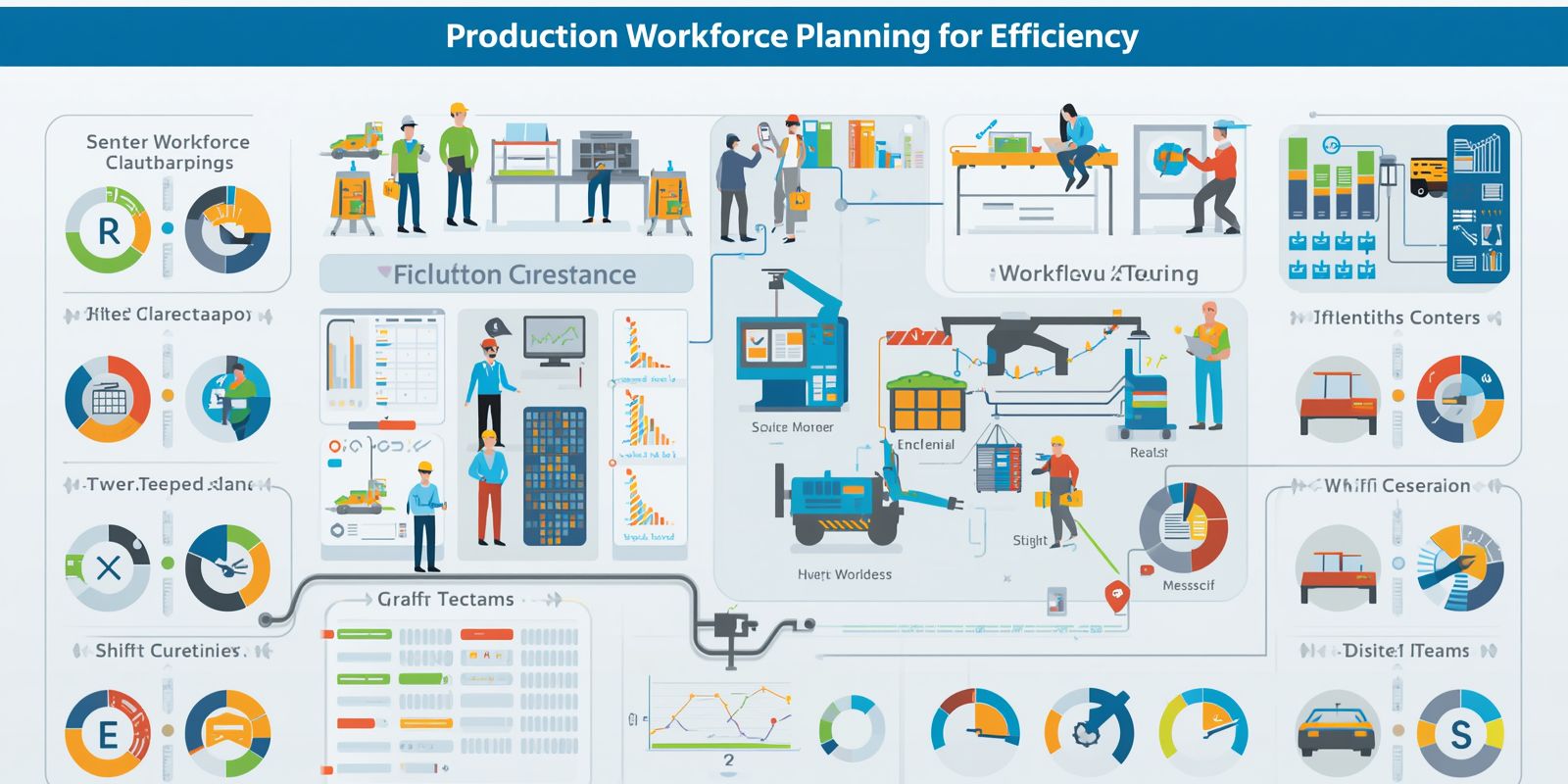
Production workforce planning is the strategic process of forecasting labor requirements, aligning workforce capabilities with production goals, and ensuring optimal utilization of human resources. When executed effectively, it minimizes downtime, reduces labor costs, and enhances overall productivity.
This article explores the importance, strategies, and best practices for production workforce planning to improve efficiency and long-term business performance.
Understanding Production Workforce Planning
Production workforce planning involves analyzing current workforce capacity, predicting future labor needs, and implementing strategies to bridge gaps. It ensures that the right number of employees with the right skills are available at the right time.
Key elements include:
- Workforce demand forecasting
- Skills assessment and gap analysis
- Scheduling and shift planning
- Performance monitoring
Efficient workforce planning aligns production goals with human capital, ensuring smooth operations and reduced inefficiencies.
Importance of Workforce Planning in Production
1. Optimized Resource Utilization
Effective workforce planning ensures that employees are neither underutilized nor overburdened. Balanced workloads lead to better productivity and employee satisfaction.
2. Reduced Operational Costs
Overstaffing increases labor costs, while understaffing leads to overtime expenses and delays. Proper planning helps maintain cost efficiency.
3. Improved Productivity
When the workforce is aligned with production schedules, tasks are completed faster with fewer errors.
4. Enhanced Flexibility
A well-planned workforce can quickly adapt to demand fluctuations, seasonal changes, or unexpected disruptions.
5. Better Employee Engagement
Clear roles, manageable workloads, and proper scheduling contribute to higher morale and lower turnover rates.
Key Components of Effective Workforce Planning
1. Demand Forecasting
Accurate forecasting is the foundation of workforce planning. It involves analyzing historical data, market trends, and production targets to estimate future labor needs.
2. Workforce Analysis
Evaluate current workforce capabilities, including skills, experience, and productivity levels. This helps identify gaps and training needs.
3. Scheduling and Shift Management
Efficient scheduling ensures that the workforce is available when needed. Rotational shifts, flexible timings, and proper break management improve efficiency.
4. Training and Development
Upskilling employees enhances productivity and prepares them for future roles. A skilled workforce reduces dependency on external hiring.
5. Performance Tracking
Regular monitoring of employee performance helps identify inefficiencies and areas for improvement.
Strategies for Production Workforce Planning
1. Implement Data-Driven Decision Making
Use data analytics tools to track workforce performance, attendance, and productivity. Data-driven insights lead to better planning and decision-making.
2. Adopt Flexible Staffing Models
Incorporate temporary, contract, or part-time workers to handle peak demand periods without increasing permanent workforce costs.
3. Cross-Training Employees
Training employees in multiple roles increases flexibility and reduces dependency on specific individuals.
4. Use Workforce Management Software
Automation tools simplify scheduling, attendance tracking, and performance analysis, reducing manual errors and saving time.
5. Align Workforce Planning with Business Goals
Ensure that workforce strategies are aligned with production targets, growth plans, and organizational objectives.
Challenges in Workforce Planning
1. Demand Uncertainty
Fluctuating market demand makes it difficult to predict workforce requirements accurately.
2. Skill Shortages
Lack of skilled labor can impact production efficiency and quality.
3. Employee Turnover
High turnover disrupts workforce stability and increases hiring and training costs.
4. Inefficient Scheduling
Poor scheduling leads to idle time, overtime costs, and reduced productivity.
5. Resistance to Change
Employees may resist new technologies or processes, affecting implementation.
Best Practices for Workforce Efficiency
1. Regular Workforce Reviews
Continuously evaluate workforce performance and adjust plans based on real-time data.
2. Invest in Technology
Modern workforce management systems streamline operations and improve accuracy.
3. Focus on Employee Well-being
Healthy and satisfied employees are more productive and engaged.
4. Enhance Communication
Clear communication between management and employees ensures smooth execution of plans.
5. Develop Leadership Skills
Strong leadership helps manage teams effectively and drives productivity.
Role of Technology in Workforce Planning
Technology has transformed workforce planning by providing real-time insights and automation capabilities. Key technological solutions include:
- AI and Predictive Analytics: Helps forecast labor needs accurately
- Cloud-Based Workforce Systems: Enables remote access and real-time updates
- Automation Tools: Reduces manual tasks and improves efficiency
- Performance Dashboards: Tracks productivity and identifies bottlenecks
These tools allow organizations to make informed decisions and adapt quickly to changing conditions.
Benefits of Efficient Workforce Planning
Organizations that invest in workforce planning experience multiple advantages:
- Increased production efficiency
- Reduced labor costs
- Improved product quality
- Better employee satisfaction
- Enhanced operational flexibility
These benefits contribute to long-term growth and competitiveness in the market.
Future Trends in Workforce Planning
1. Digital Transformation
Adoption of advanced technologies will continue to reshape workforce planning processes.
2. Gig and Contract Workforce
Flexible employment models will become more common in production environments.
3. Skill-Based Workforce Planning
Focus will shift from job roles to skill sets, enabling better resource allocation.
4. Remote Monitoring and Management
Technology will allow supervisors to manage workforce operations remotely.
5. Sustainability and Efficiency
Organizations will prioritize sustainable workforce practices to reduce waste and improve efficiency.
Conclusion
Production workforce planning is a critical component of operational efficiency. By aligning workforce capabilities with production goals, organizations can achieve higher productivity, reduced costs, and improved employee satisfaction.
Effective planning requires a combination of data-driven insights, flexible strategies, and continuous improvement. As technology continues to evolve, organizations that embrace modern workforce planning practices will gain a competitive edge in the production industry.
Investing in workforce planning today ensures a more efficient, resilient, and future-ready production system.