Introduction
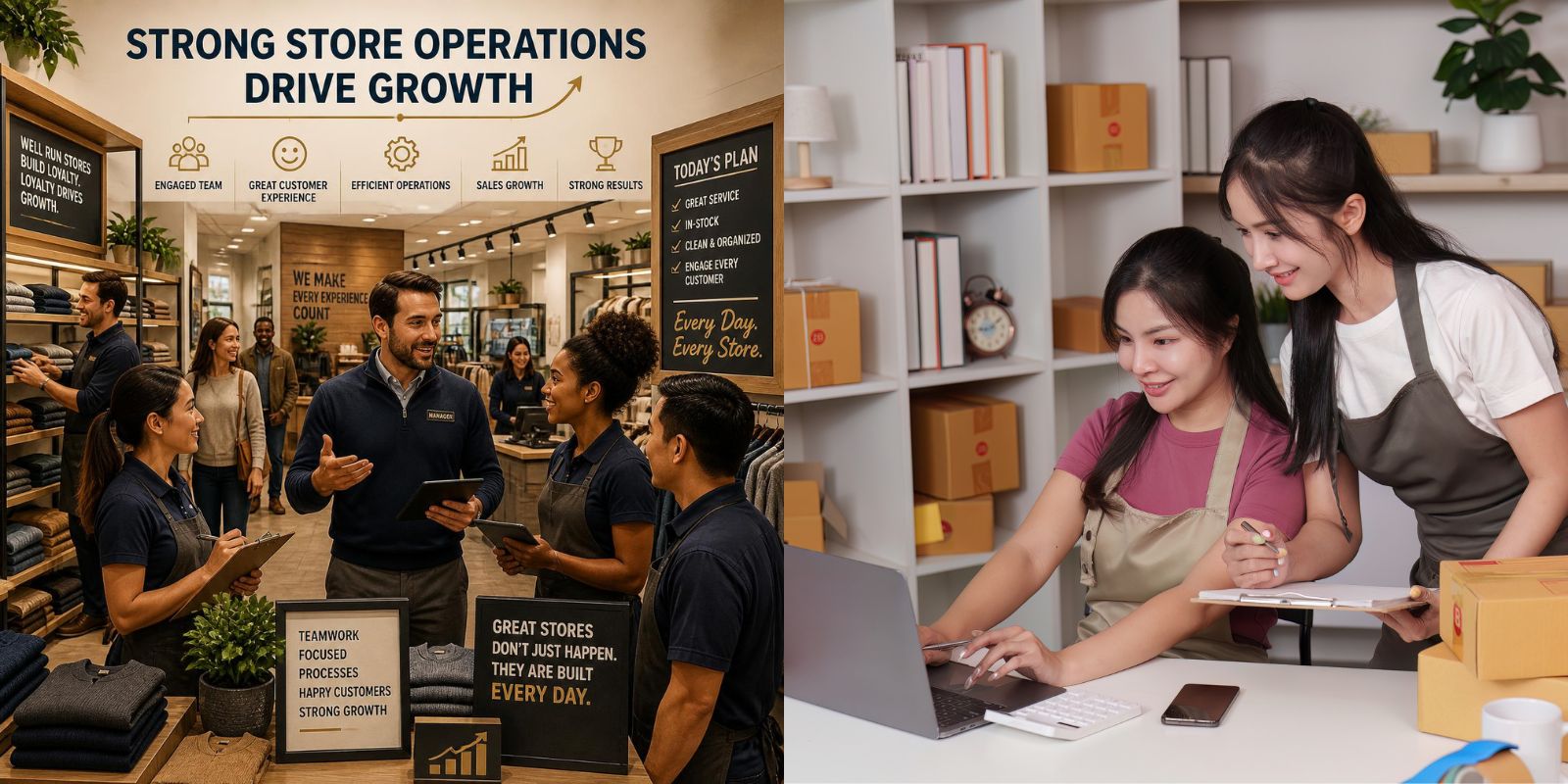
In the competitive retail industry, business growth depends on much more than attractive products and effective marketing. A successful retail business needs strong store operations to ensure that every part of the customer journey works smoothly. From inventory management and employee scheduling to customer service, billing, merchandising, and store maintenance, operational excellence plays a critical role in achieving consistent performance.
Strong store operations create an organized environment where employees can work efficiently and customers can enjoy a positive shopping experience. When daily processes are managed effectively, retailers can reduce unnecessary costs, improve productivity, increase sales, and build stronger customer loyalty.
This is why store operations should be viewed as a strategic business function rather than simply a routine administrative activity.
What Are Store Operations?
Store operations include all the daily activities required to keep a retail outlet functioning effectively.
These activities may include:
- Staff scheduling and workforce management
- Inventory control
- Product replenishment
- Customer service
- Billing and payments
- Store merchandising
- Sales management
- Housekeeping and maintenance
- Security and safety
- Returns and exchanges
- Performance monitoring
Every activity is connected. A shortage of staff can affect customer service, poor inventory management can result in lost sales, and inefficient processes can increase operating costs.
Strong store operations ensure that these functions work together toward common business objectives.
Why Strong Store Operations Matter
Customers expect retail stores to be convenient, organized, responsive, and efficient. They want products to be available, employees to be helpful, queues to be manageable, and transactions to be completed smoothly.
Operational weaknesses can quickly become visible to customers.
For example, if products are not replenished on time, customers may leave without purchasing. If there are not enough employees during peak hours, waiting times may increase. If staff are not properly trained, customer questions may not be handled effectively.
Strong operations address these challenges by creating clear processes and assigning the right resources to each activity.
The Connection Between Operations and Business Growth
Efficient store operations directly influence profitability and growth.
When stores operate smoothly, employees can spend more time serving customers, inventory can move efficiently, and management can identify problems before they become costly.
Operational excellence can support growth through:
- Higher sales productivity
- Better customer satisfaction
- Lower operational costs
- Reduced inventory losses
- Improved employee performance
- Faster service
- Better resource utilization
- Consistent store standards
A business that operates efficiently at one location can also replicate successful processes when expanding into new stores or markets.
Effective Workforce Management
Employees are one of the most important components of store operations.
Having the right number of employees at the right time is essential. Understaffing can create pressure and poor customer service, while overstaffing can increase unnecessary costs.
Effective workforce management involves understanding:
- Store footfall
- Peak shopping hours
- Employee availability
- Sales targets
- Store size
- Customer service requirements
- Seasonal demand
- Promotional campaigns
Smart scheduling allows businesses to align staffing levels with customer demand.
The Role of Smart Staffing
Smart staffing helps retailers build flexible and reliable teams.
Instead of hiring only when a vacancy occurs, retailers can plan their workforce according to current and future business requirements.
Staffing partners can support retailers with:
- Candidate sourcing
- Employee screening
- Bulk recruitment
- Temporary staffing
- Contract staffing
- Seasonal hiring
- Workforce deployment
- Replacement hiring
- Attendance management
This allows store management teams to focus on operations while recruitment specialists support workforce requirements.
Inventory Management and Store Growth
Inventory is at the heart of retail operations. Customers cannot purchase products that are unavailable.
Effective inventory management helps retailers maintain the right stock levels while avoiding excessive inventory.
Important inventory practices include:
- Regular stock counting
- Accurate inventory records
- Timely replenishment
- Monitoring fast-moving products
- Identifying slow-moving stock
- Reducing damaged goods
- Preventing stock loss
- Coordinating with suppliers
Technology can improve inventory visibility and help store managers make better replenishment decisions.
Delivering Better Customer Service
Customer experience is one of the strongest drivers of retail success.
Employees should be trained to greet customers professionally, understand their requirements, provide accurate information, and handle complaints appropriately.
Strong store operations make customer service more consistent by establishing clear service standards.
Retail businesses should monitor:
- Customer feedback
- Complaint resolution
- Waiting times
- Product availability
- Employee interactions
- Checkout efficiency
Improving these areas can strengthen customer satisfaction and encourage repeat visits.
Merchandising and Store Presentation
Store presentation influences customer perception and purchasing behavior.
Products should be displayed clearly and attractively. Promotional materials should be positioned correctly, shelves should be organized, and high-demand products should be easy to find.
Effective merchandising includes:
- Product placement
- Shelf organization
- Promotional displays
- Signage
- Lighting
- Cleanliness
- Seasonal displays
A well-maintained store creates a professional brand image and makes shopping easier for customers.
Technology in Store Operations
Technology has become an important part of modern retail management.
Retail technology can help businesses improve accuracy, speed, and visibility.
Common technologies include:
- Point-of-sale systems
- Inventory management software
- Workforce scheduling platforms
- Digital payment systems
- Customer relationship management tools
- Business analytics
- Digital attendance systems
These tools can reduce manual work and provide managers with useful operational data.
For example, sales data can identify product trends, while workforce data can help managers understand staffing requirements.
Training Employees for Operational Excellence
Even the best operational systems require capable employees.
Training ensures that employees understand store processes and can perform their responsibilities confidently.
Training programs can cover:
- Product knowledge
- Customer service
- Sales techniques
- POS systems
- Inventory procedures
- Safety standards
- Store policies
- Complaint handling
- Workplace communication
Continuous learning can improve employee productivity and reduce operational mistakes.
Maintaining Store Standards
Consistency is especially important for retail businesses with multiple locations.
Customers should receive a similar level of service regardless of which store they visit.
Retail businesses can maintain consistency through:
- Standard operating procedures
- Regular employee training
- Store audits
- Performance reviews
- Clear operational guidelines
- Quality checks
- Managerial supervision
Standardization allows successful processes to be replicated across locations.
Managing Peak Shopping Periods
Retail demand can increase significantly during festivals, holidays, weekends, promotional campaigns, and product launches.
Without proper preparation, stores may experience staff shortages, stockouts, long queues, and customer dissatisfaction.
Retailers should prepare by:
- Forecasting expected demand.
- Increasing staffing where required.
- Replenishing inventory in advance.
- Training employees on promotional offers.
- Optimizing shift schedules.
- Monitoring store performance throughout the peak period.
Seasonal staffing can provide additional workforce support without creating permanent excess staffing costs.
Measuring Store Performance
What gets measured can be improved.
Retail managers should track important operational indicators to understand store performance.
Useful metrics include:
- Sales per employee
- Conversion rate
- Customer satisfaction
- Average transaction value
- Inventory turnover
- Stock availability
- Employee attendance
- Staff turnover
- Customer complaints
- Operating costs
Regular performance reviews help management identify strengths, weaknesses, and opportunities for improvement.
Reducing Operational Costs
Strong operations can help retailers control expenses without compromising customer experience.
Cost optimization can come from:
- Better workforce scheduling
- Reduced overtime
- Lower employee turnover
- Improved inventory control
- Reduced product wastage
- Efficient energy usage
- Better supplier coordination
- Automated administrative processes
The objective should not simply be to spend less. It should be to use resources more effectively.
Store Operations and Expansion
Businesses planning expansion need strong operational systems before opening new locations.
A successful store model should have clear processes for:
- Recruitment
- Training
- Inventory
- Customer service
- Store setup
- Sales management
- Workforce scheduling
- Performance reporting
When these processes are standardized, businesses can scale more efficiently.
Operational consistency reduces the risk of performance differences between locations.
Building a Culture of Operational Excellence
Strong store operations are not created by managers alone. Every employee contributes to operational performance.
Businesses should encourage employees to take ownership of their responsibilities and identify areas for improvement.
A culture of operational excellence can include:
- Clear accountability
- Open communication
- Continuous improvement
- Employee recognition
- Regular feedback
- Team collaboration
- Data-driven decision-making
When employees understand how their work contributes to store performance, they are more likely to take responsibility for results.
Conclusion
Strong store operations provide the foundation for sustainable retail growth. Efficient workforce management, inventory control, customer service, merchandising, technology, employee training, and performance monitoring all contribute to a successful retail operation.
Retail businesses that strengthen their operational processes can improve productivity, control costs, deliver better customer experiences, and create a scalable model for expansion.
The future of retail will belong to businesses that can combine technology with strong people management and efficient operations. By investing in the right workforce, clear processes, continuous training, and smart operational strategies, retailers can turn everyday store activities into powerful drivers of business growth.
Strong operations create stronger stores—and stronger stores create stronger businesses.