Introduction
In today’s fast-paced and competitive business environment, organizations must ensure that they have the right people, with the right skills, in the right roles, at the right time. This is where end-to-end workforce planning for operations becomes critical. It is a strategic approach that aligns workforce capabilities with business goals, ensuring operational efficiency, cost optimization, and long-term sustainability.
End-to-end workforce planning goes beyond simple staffing. It encompasses forecasting, recruitment, training, performance management, and continuous improvement. For operations-driven industries such as manufacturing, healthcare, logistics, and retail, an effective workforce plan can significantly enhance productivity and reduce operational risks.
What Is End-To-End Workforce Planning?
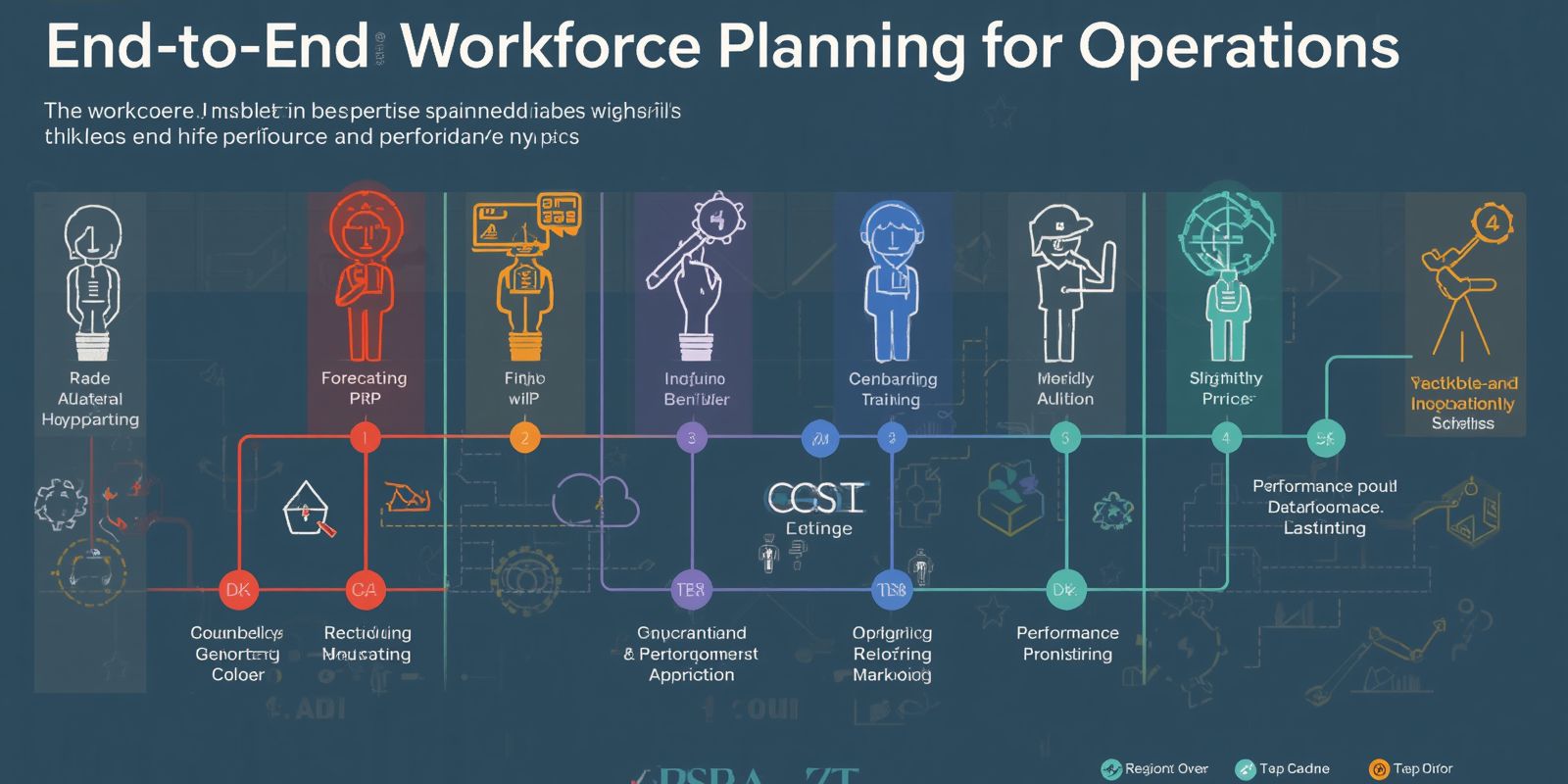
End-to-end workforce planning is a comprehensive process that covers the entire employee lifecycle—from identifying workforce needs to managing performance and future development. It integrates multiple HR and operational functions into a unified strategy.
This approach includes:
- Workforce demand forecasting
- Talent acquisition and onboarding
- Skills assessment and training
- Workforce scheduling and allocation
- Performance monitoring
- Succession planning
By connecting all these elements, organizations can create a seamless workforce ecosystem that supports operational excellence.
Importance of Workforce Planning in Operations
Operations are the backbone of any organization. Whether it’s producing goods, delivering services, or managing supply chains, operations require precision and efficiency. Workforce planning ensures that these processes run smoothly.
Key Benefits
1. Improved Productivity
Proper workforce allocation ensures that tasks are handled efficiently, reducing downtime and maximizing output.
2. Cost Optimization
Avoiding overstaffing and understaffing helps control labor costs and improves profitability.
3. Enhanced Employee Engagement
Employees who are well-matched to their roles tend to be more satisfied and productive.
4. Better Risk Management
Workforce planning helps mitigate risks such as skill shortages, high turnover, and unexpected demand spikes.
5. Strategic Alignment
Aligning workforce capabilities with business goals ensures long-term growth and sustainability.
Key Components of End-To-End Workforce Planning
1. Workforce Demand Forecasting
Forecasting involves predicting future workforce needs based on business goals, market trends, and operational demands. Organizations use historical data, analytics, and industry insights to estimate staffing requirements.
Accurate forecasting helps in:
- Planning recruitment strategies
- Budget allocation
- Preparing for seasonal or project-based demands
2. Talent Acquisition and Recruitment
Once workforce needs are identified, the next step is acquiring the right talent. This includes sourcing, screening, interviewing, and onboarding candidates.
Modern recruitment strategies leverage:
- Digital platforms
- AI-driven screening tools
- Employer branding
Hiring the right talent ensures operational efficiency and reduces training costs.
3. Skills Assessment and Training
A skilled workforce is essential for operational success. Organizations must continuously assess employee skills and provide training to bridge gaps.
Training programs may include:
- Technical skill development
- Soft skills training
- Compliance and safety training
Upskilling and reskilling ensure that employees remain relevant in a rapidly changing work environment.
4. Workforce Scheduling and Allocation
Efficient scheduling ensures that the right number of employees are available at the right time. This is especially critical in industries with fluctuating demand.
Effective scheduling considers:
- Peak and off-peak hours
- Employee availability
- Skill requirements
Advanced workforce management systems use automation and real-time data to optimize scheduling.
5. Performance Management
Monitoring employee performance is crucial for maintaining operational standards. Organizations use key performance indicators (KPIs) to evaluate productivity and efficiency.
Performance management includes:
- Regular evaluations
- Feedback and coaching
- Incentive programs
This helps in identifying high performers and addressing performance gaps.
6. Succession Planning
Succession planning ensures business continuity by preparing employees for future leadership roles. It involves identifying potential leaders and providing them with necessary training and exposure.
Benefits include:
- Reduced dependency on external hiring
- Faster leadership transitions
- Strong organizational culture
Role of Technology in Workforce Planning
Technology plays a vital role in modern workforce planning. Digital tools and platforms enable organizations to automate processes, analyze data, and make informed decisions.
Key Technologies
1. Workforce Management Software
These tools help in scheduling, attendance tracking, and performance monitoring.
2. Data Analytics
Analytics provide insights into workforce trends, helping in better decision-making.
3. Artificial Intelligence (AI)
AI helps in predictive analytics, recruitment automation, and workforce optimization.
4. Cloud-Based Solutions
Cloud platforms enable real-time access to workforce data and improve collaboration.
Challenges in Workforce Planning
Despite its benefits, workforce planning comes with challenges that organizations must address.
Common Challenges
1. Inaccurate Forecasting
Poor data quality can lead to incorrect workforce predictions.
2. Skill Gaps
Rapid technological changes can create skill shortages.
3. Employee Turnover
High attrition rates disrupt workforce stability.
4. Resistance to Change
Employees may resist new systems or processes.
5. Integration Issues
Combining multiple systems and processes can be complex.
Best Practices for Effective Workforce Planning
To overcome challenges and maximize benefits, organizations should follow best practices.
1. Align Workforce Planning with Business Goals
Ensure that workforce strategies support overall business objectives. This alignment improves efficiency and decision-making.
2. Use Data-Driven Insights
Leverage analytics to make informed decisions about hiring, training, and scheduling.
3. Focus on Employee Development
Invest in training and development to build a skilled and adaptable workforce.
4. Adopt Flexible Workforce Models
Use a mix of full-time, part-time, and contract workers to handle varying workloads.
5. Continuously Monitor and Improve
Regularly review workforce plans and make adjustments based on changing business needs.
Future Trends in Workforce Planning
The future of workforce planning is shaped by technological advancements and changing work dynamics.
Emerging Trends
1. Remote and Hybrid Work Models
Organizations are adopting flexible work arrangements to improve productivity and employee satisfaction.
2. Gig Economy Integration
Freelancers and contract workers are becoming an integral part of workforce strategies.
3. AI-Driven Workforce Planning
AI will play a bigger role in predicting workforce needs and optimizing operations.
4. Focus on Employee Well-Being
Companies are prioritizing mental health and work-life balance.
5. Skill-Based Workforce Planning
Instead of focusing on job roles, organizations are emphasizing skills and competencies.
Conclusion
End-to-end workforce planning for operations is no longer optional—it is a necessity for organizations aiming to stay competitive in today’s dynamic environment. By integrating all aspects of workforce management, businesses can ensure operational efficiency, cost optimization, and long-term growth.
A well-executed workforce plan enables organizations to adapt to changes, address challenges, and seize new opportunities. With the right combination of strategy, technology, and people, companies can build a resilient and future-ready workforce.